
A single glass or windshield claim usually does not significantly raise your base auto premium, but exceptions exist. State rules, how your insurer codes the claim, and how many claims you have filed recently can all change that answer. Before filing, compare your repair estimate to your deductible and call your agent to confirm how the claim will be coded.
TL;DR:
- Most glass claims are classified as comprehensive and typically do not impact your premium unless you file multiple claims within a short period.
- Insurers consider the pattern of claims over time, not just individual incidents, so repeated claims can trigger higher rates or non-renewal.
- Zero-deductible glass coverage options, available in some states and policies, can eliminate out-of-pocket costs for repairs and reduce the financial barrier to filing claims.
- Filing a small claim below your deductible generally has no financial benefit and may slightly affect your CLUE record, influencing future quotes.
- Prompt repairs, especially for chips, often take less than 30 minutes and can be coordinated directly with insurers for potential zero-cost repairs and minimized record impact.
Table of Contents
- How Insurers Classify Glass Claims (Comprehensive vs Collision)
- State Rules and Zero-Deductible Glass Coverage Explained
- Does a Glass Claim Affect Your Discounts and Renewal Pricing?
- Claim Frequency, CLUE Reports, and How Long Claims Follow You
- Cost Math: Deductible vs Repair Cost, Worked Through
- What to Ask Your Insurer Before You File
- A Technician’s View: Repair Timing, Insurer Coordination, and $0 Claims
- Where Conventional Advice on Glass Claims Falls Short
- Getting Your Windshield Fixed Without the Runaround
- Where to Verify Your Insurer’s Glass Claim Rules
- Sources
- FAQ
How Insurers Classify Glass Claims (Comprehensive vs Collision)
Whether a glass claim affects your rate hinges almost entirely on how it gets coded. Most cracked windshields and chipped glass fall under comprehensive coverage, sometimes called “other-than-collision” coverage. This is the part of your policy that pays for damage you didn’t cause through driving, things that happen to your car rather than because of how you drove it.
Comprehensive claims typically cover:
- Rock chips and cracks from road debris
- Vandalism or theft-related glass damage
- Hail, falling branches, or storm damage
- Fire or animal-related glass breakage
Glass damage gets coded as a collision claim only when it happens as part of an actual crash, say, your windshield shatters because you hit a guardrail. That reclassification matters because collision claims are rated differently and tend to draw more insurer attention, particularly when fault is involved.
This distinction is why most insurers, including Progressive, treat a standalone rock chip or crack as a low-severity, no-fault event. There’s no driver behavior to underwrite against. You didn’t run a light or follow too closely. Something hit your car. That’s a fundamentally different risk signal than an at-fault accident, and rating systems generally reflect that difference.
State Rules and Zero-Deductible Glass Coverage Explained
A handful of states and insurers have built specific accommodations for glass damage into their coverage structures, and knowing whether yours does changes the entire filing calculus.
Full safety glass coverage is an optional endorsement that waives your deductible specifically for glass repair or replacement. It typically adds a modest amount to your annual premium, and in many policies, it also covers ADAS recalibration costs tied to the replacement, which can otherwise run several hundred dollars on its own.

Some states have gone further, essentially normalizing zero-deductible glass repair as standard practice, while The Hartford notes many carriers now offer no-deductible glass programs even outside those states, especially for chip repairs rather than full replacements.
Before you file anything, check two places:
- Your policy’s declarations page, which lists your actual glass deductible and any glass endorsement
- Your state insurance department’s website, which publishes consumer guidance on glass coverage rules
If you’re unsure whether your policy includes a waived-deductible option, a quick look at zero-deductible glass coverage by state can save you a phone call. Zero deductible on a repair means filing costs you nothing out of pocket, which removes the main reason people hesitate to file at all.
Does a Glass Claim Affect Your Discounts and Renewal Pricing?
Even when a glass claim doesn’t trigger a direct surcharge, it can still cost you money indirectly, and this is the part most drivers overlook.
Claims-free discounts reward you for going a certain number of years, often three to five, without filing anything. File a comprehensive claim, even a small one, and that clock frequently resets. You keep your base rate, but you lose the discount that was quietly lowering your bill. The math still works against you even though nobody called it a surcharge.
Separately, insurers run underwriting reviews at renewal that differ from an immediate rate hike:
- A single small claim rarely triggers non-renewal or a same-cycle premium jump
- Underwriters look at your claims pattern over multiple renewal cycles, not just one event
- Coverage Classroom notes that some regional carriers apply modest surcharges once a customer files multiple comprehensive claims in a short window, even without an at-fault accident on record
Non-renewal over one glass claim is rare. It becomes a real possibility only when glass claims stack up alongside other comprehensive losses within the same underwriting window.
Claim Frequency, CLUE Reports, and How Long Claims Follow You
The single biggest factor insurers weigh isn’t the claim itself. It’s the pattern. A windshield replacement counts as a formal insurance claim, and it gets reported to CLUE, the Comprehensive Loss Underwriting Exchange that virtually every major carrier checks before writing or renewing a policy.

Pro Tip: CLUE records can stay visible to insurers for up to seven years, so a glass claim you filed three years ago at one company can still surface when you shop for a new policy elsewhere.
That retention window means frequency, not severity, drives risk scoring for glass claims. Filing one rock-chip repair rarely raises a flag on its own. But:
- Multiple comprehensive claims within a two to three year window often trigger closer underwriting scrutiny, even when each individual claim was small
- Major national carriers increasingly treat isolated glass claims as low-severity and absorb them without a surcharge, while smaller regional insurers are more likely to apply modest rate increases once claims repeat
- A pattern of glass claims can affect the quotes you receive from a new insurer, even if your current carrier never raised your rate
If you’re curious how long a specific claim will sit on your record before it stops influencing quotes, how long a windshield claim stays on your insurance breaks down the timeline in more detail.
Cost Math: Deductible vs Repair Cost, Worked Through
Filing a claim should come down to arithmetic, not instinct. Here’s how to run the numbers before you call your insurer.
- Get the actual repair or replacement estimate first. A chip repair typically runs well under $100. A full windshield replacement, especially on a vehicle with ADAS sensors, can run several hundred dollars once calibration is included.
- Compare that number to your deductible. If your comprehensive deductible is $500 and the repair costs $80, filing a claim gains you nothing. You’d pay the full $80 out of pocket regardless, since the deductible sits above the repair cost.
- Check for a zero-deductible repair clause. Many policies waive the deductible specifically for chip repairs, even when the full deductible applies to a replacement. If that’s the case, filing costs you nothing and gets the crack fixed before it spreads.
- Factor in a full replacement scenario separately. If your windshield needs full replacement at $400 to $700 including recalibration, and your deductible is $250, filing makes clear financial sense, you cover the deductible and the insurer covers the rest.
The decision often comes down to one repair size threshold: below your deductible, pay out of pocket; above it, file. Weighing repair against replacement before you call anyone puts you in a stronger position to make that call quickly.
What to Ask Your Insurer Before You File
A five-minute phone call before you file can save you from a surprise on your next renewal notice. Ask your agent or claims representative these questions directly:
- How will this specific claim be coded, comprehensive or collision, and does that change based on how the damage occurred?
- Is my glass deductible waived for repairs, and does that waiver extend to full replacements?
- If I need ADAS recalibration after a replacement, is that cost included in this claim?
- Will filing this claim affect my claims-free discount at renewal, and if so, by how much?
- How many comprehensive claims typically trigger a rate review or surcharge under my policy?
- Do you report glass claims to CLUE, and how long will this claim remain visible to other insurers?
Write down the answers. If your agent can’t answer one of these clearly, ask for it in writing before you commit to filing.
A Technician’s View: Repair Timing, Insurer Coordination, and $0 Claims
Working glass repairs and replacements every day gives a different vantage point than a policy document does, and it starts with timing. A chip repair generally takes about 30 minutes. A full replacement with recalibration takes considerably longer and costs considerably more. That gap is the entire argument for repairing early rather than waiting for a small chip to spread into a crack that forces a replacement.
Mobile technicians routinely coordinate directly with insurers, submitting estimates and handling authorization so the customer doesn’t have to manage the claim process alone. When the insurer authorizes direct billing, that workflow is what makes $0 out-of-pocket service possible.
| Scenario | Typical Time | Claim Impact |
|---|---|---|
| Chip repair | About 30 minutes | Often deductible-waived, minimal record impact |
| Full replacement | Several hours | May include ADAS recalibration, reported to CLUE |
| Replacement without insurer coordination | Same, plus added customer steps | Customer manages billing and paperwork directly |
- ADAS-equipped vehicles almost always need recalibration after replacement, and many insurers cover that cost when they cover the glass itself.
- Repairing a chip promptly, often in well under an hour, is usually cheaper and simpler than waiting for it to force a full replacement later.
Where Conventional Advice on Glass Claims Falls Short
Most guidance on this topic stops at “glass claims rarely raise your rate” and leaves it there. That’s true, but it’s an incomplete answer, and treating it as the whole picture leads people to make two opposite mistakes.
Some drivers avoid filing at all, paying out of pocket for a $600 replacement out of fear their rate will spike, when their policy actually includes a waived deductible they never checked. Others file every minor chip without checking their deductible first, stacking small claims onto their CLUE record for no financial benefit, since the repair cost sat below the deductible anyway.
The advice that actually holds up under scrutiny is narrower: check your deductible and coverage details first, every single time, before you decide anything. State rules and insurer practices vary enough that a blanket rule doesn’t serve you. What should change your behavior isn’t fear of one claim. It’s understanding that frequency, not severity, is what insurers track over time. One glass claim is a data point. Three in two years is a pattern, and patterns are what underwriters actually price against.
— Speedy Windshield Repair
Getting Your Windshield Fixed Without the Runaround
Some auto glass repair providers handle parts of this process that usually cause the most friction, verifying your coverage and managing the paperwork with your insurer directly, so you’re not stuck relaying quotes back and forth between a claims line and a repair shop.
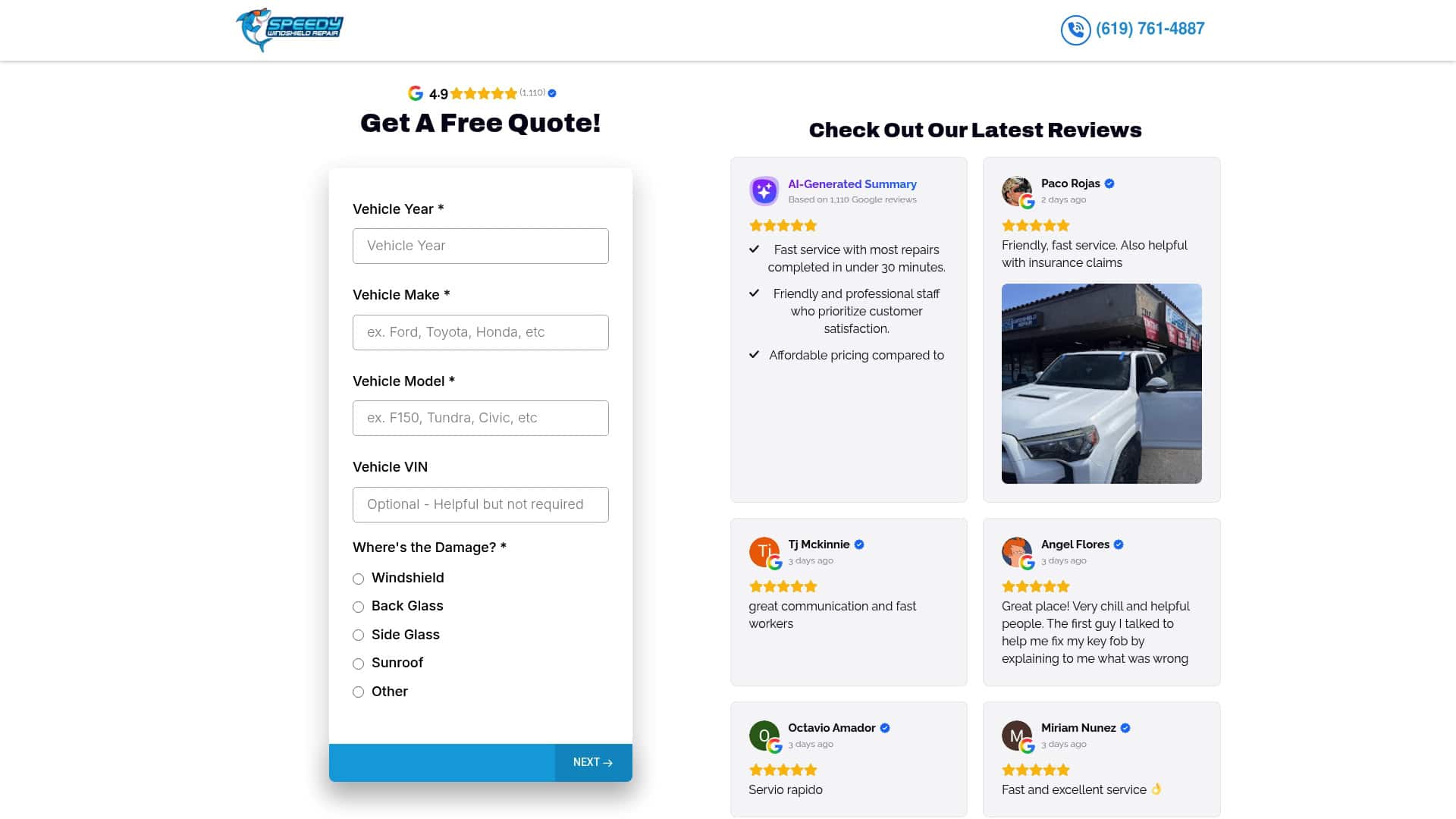
The workflow is straightforward: get an estimate, verify what your policy actually covers, schedule a mobile appointment at your home or office, and get a lifetime workmanship warranty on the finished work. Because certified technicians often coordinate with insurance providers, some customers may pay little to no out-of-pocket costs once coverage is confirmed, and ADAS recalibration can be scheduled as part of the same visit when a replacement is needed.
If you’re not sure whether your damage qualifies for repair or needs full replacement, comparing your options before you call your insurer puts you in a better position to ask the right questions. Ready to check your coverage and get a real number instead of a guess? Get a mobile quote and confirm your out-of-pocket cost before you file anything.
Where to Verify Your Insurer’s Glass Claim Rules
Policy language and state rules shift often enough that it’s worth confirming details directly rather than relying on secondhand summaries.
- State Farm: general guidance on when claims affect premiums
- Progressive: confirms $0 deductible options in some states for glass-only claims
- The Hartford: explains no-deductible glass programs and repair versus replacement coverage
- LegalClarity: breaks down full safety glass coverage and recalibration cost inclusion
For general glass care between repairs, proper glass maintenance guidance covers safe cleaning practices that won’t compromise a repaired chip or a fresh replacement seal.
This article is general information, not a substitute for advice from a qualified financial advisor. Consult a qualified financial professional about your own circumstances before acting on anything here.
Sources
- Will my insurance increase after a claim? – State Farm
- Windshield damage | Progressive
- Windshield Crack Car Insurance Claim: Rate Impact 2026 | Coverage Classroom
FAQ
Will a windshield claim raise my rates?
Usually not by much. A single comprehensive glass claim is typically treated as a low-severity, no-fault event, though state rules and insurer practices vary, and repeated claims are more likely to draw a rate review than one isolated repair.
Do glass claims count against you?
They count as a formal claim on your record and get reported to CLUE, but a single glass claim rarely counts against you the way an at-fault accident does. Frequency matters more than the single event.
Do glass claims affect insurance premiums with Progressive?
Progressive treats most windshield repairs as covered under comprehensive coverage, and offers $0 deductible options for glass-only claims in some states, which limits both your cost and your premium risk.
What does a $500 deductible full glass mean?
It means you pay the first $500 toward a full windshield replacement before your comprehensive coverage pays the remainder, unless your policy includes a waived-deductible endorsement for glass specifically.
Does Speedy Windshield Repair San Diego handle insurance claims directly?
Yes. Certified technicians coordinate directly with insurers on estimates and authorization, which often results in $0 out-of-pocket service once coverage is confirmed.
Recommended
- How long does a windshield claim stay on your insurance in La Jolla?
- Auto Glass Replacement Cost Factors in 2026 Guide
- Breaking: Major Advances in Auto Glass Repair Technology this Year
- Zero Deductible Glass Coverage: Which States Qualify