

Safe Drive-Away Time (SDAT) is the number that actually matters after a windshield replacement, and it depends entirely on the adhesive and the weather that day. Modern fast-cure urethanes can clear you to drive in roughly a short to moderate amount of time, conventional adhesives often need several hours, and full structural cure can take an entire day or more. Whatever number your technician writes down on your paperwork is the one to follow, no exceptions.
TL;DR:
- Fast-cure adhesives can typically allow driving within 30 minutes to one hour under ideal warm conditions, but weather significantly influences cure times.
- Cooler, humid, or damp weather can double or triple the SDAT, requiring close consultation with your technician to confirm the safe drive-away window.
- It is crucial to follow the exact SDAT given by your installer and avoid getting the windshield wet or removing the retention tape early within the first 24 to 48 hours.
- ADAS recalibration should only be performed after the minimum drive-away time has been met, and documented proof of calibration is essential for warranty purposes.
- Skipping or prematurely ending the aftercare routines can compromise safety, warranty coverage, and the structural integrity of the windshield in a collision.
Table of Contents
- What Is Safe Drive-Away Time and Why Does It Matter?
- How Long Does Urethane Take to Cure? Typical SDAT Ranges
- What Factors Change Windshield Adhesive Drying Time?
- What Should You Do in the First 24 to 48 Hours?
- When Does ADAS Recalibration Happen After Replacement?
- How Do You Verify the Cure Time Your Installer Gives You?
- What If the Windshield Got Wet, or You Drove Too Early?
- Speedy Windshield Repair: Real-World Experience and What We Tell Customers
- Ready for a Windshield Replacement Done Right?
- Where to Verify These Standards Yourself
- Sources
- FAQ
What Is Safe Drive-Away Time and Why Does It Matter?
Safe Drive-Away Time is the minimum time your car has to sit still after installation before the urethane adhesive has enough strength to do its job in a crash. It’s not the same as full cure, which is when the adhesive reaches its maximum bond strength, often 24 hours or more after installation.
The windshield isn’t just a window. It’s a structural part of your car that helps the roof resist crushing in a rollover and gives the passenger airbag something solid to push against when it deploys. Drive away too soon, and that bond hasn’t set enough to hold up in a collision. I-CAR’s technical guidance confirms that driving before the adhesive reaches minimum strength raises real risks: windshield ejection, airbag misfire, and roof collapse in a rollover.
That’s why SDAT isn’t a courtesy estimate. It’s a safety threshold, and here’s what a professional installer owes you:
- A specific SDAT number in writing, not a vague “give it a few hours”
- That number adjusted for the day’s actual temperature and humidity, not a generic average
- Written or verbal confirmation before handing back your keys
How Long Does Urethane Take to Cure? Typical SDAT Ranges
The range you’ll hear from a shop depends almost entirely on which adhesive they use. Here’s what those numbers typically look like in practice:
- Fast-cure urethanes: Under ideal conditions, these products can hit SDAT in as little as around half an hour to an hour, sometimes somewhat longer depending on the exact formula. Sika’s PowerCure and SikaTack ELITE lines are built specifically for this quick turnaround.
- Conventional moisture-cured urethanes: These typically need 1 to 8 hours before the vehicle is safe to drive, and some jobs push closer to that upper end depending on temperature and humidity.
- Full structural cure: Regardless of which adhesive was used, the bond usually isn’t at its maximum strength until 24 hours or more have passed. You can drive once SDAT is met, but the adhesive is still finishing the job in the background.
The gap between these numbers is wide on purpose. A shop quoting you 30 minutes on a warm, dry afternoon with a premium fast cure adhesive isn’t cutting corners. A shop quoting you 6 to 8 hours on a cold, damp morning with a standard adhesive isn’t being slow. Both can be following the manufacturer’s technical data sheet correctly. The number only means something in context of the product and the weather that day.
What Factors Change Windshield Adhesive Drying Time?
Temperature does more to your windshield adhesive drying time than almost anything else. The chemistry behind urethane curing follows a fairly consistent pattern: for roughly every 15°F drop in temperature, cure time approximately doubles. A job that clears in 45 minutes at 75°F could take closer to 90 minutes at 60°F, and considerably longer once you’re near freezing.
Quick math: A fast-cure adhesive rated for a 60-minute SDAT at 73°F could realistically need well over two hours if your car sits outside on a 40°F morning. Ask your technician how the day’s weather changed your number.
Humidity plays a role too, though it cuts both ways. Moisture-cure urethanes rely on ambient humidity to trigger the chemical reaction, so very dry air slows things down. On the flip side, high humidity can cause the adhesive to “skin over” too fast on the surface while the inside is still soft, which is exactly why installers check both temperature and humidity, not just one.
A few other variables shift the timeline:
- Adhesive chemistry: fast-cure products cost more and demand tighter storage and handling, but they buy you speed
- Bead size: a thicker bead of urethane takes longer to cure all the way through than a thin one
- Storage location: a garage holds a stable temperature; a car left outside in wind or direct sun cures less predictably
- Installer technique: correct bead placement and clean prep affect how evenly the adhesive sets
Fast-cure adhesives sound like the obvious answer, but there’s a real tradeoff. They require stricter storage conditions and more careful handling on the installer’s end, which is part of why they typically cost more than conventional urethanes.
What Should You Do in the First 24 to 48 Hours?
Your priorities in the first two days are simple: don’t stress the seal, and don’t undo the technician’s work before it’s finished curing.
- Wait the exact SDAT you were given. Don’t round down because you’re in a hurry or because the car “seems fine.”
- Skip the car wash, especially pressure washing or an automatic wash, for at least 48 hours. High-pressure water can force its way past a seal that hasn’t fully set.
- Don’t slam the doors. Closing a door hard creates a pressure spike inside the cabin that can push against a curing windshield.
- Avoid highway speeds, rough roads, and heavy cargo for the first day if you can help it. Wind pressure and vibration both work against a fresh bond.
- Leave the retention tape in place until your technician tells you it’s fine to remove. It’s holding the glass in position while the adhesive sets, not decoration.
- Park in a garage or shaded spot when possible. Stable temperatures help the adhesive cure evenly.
Pro Tip: If your technician tells you it’s fine to crack a window slightly during the first day, do it. It relieves cabin pressure when you open and close doors and reduces stress on the new seal. Never do this unless they specifically say it’s okay, since some adhesives and vehicle designs don’t call for it.
One more thing worth knowing: a lifetime workmanship warranty typically assumes you followed the aftercare instructions you were given. Skipping the waiting period or removing tape early can complicate a warranty claim if something goes wrong later. If you want a fuller rundown before your appointment, this pre-installation checklist covers what to expect on install day.

When Does ADAS Recalibration Happen After Replacement?
If your car has a forward-facing camera for lane-keep assist or automatic braking, that system usually needs recalibrating after a windshield replacement. There are two types, and they don’t follow the same clock.
Static recalibration happens in the shop using targets and a scan tool, and its timing depends on the adhesive manufacturer’s specific instructions. Dynamic recalibration requires actually driving the vehicle under set conditions, and the AGRSS standard requires that this step wait until the vehicle has met its minimum drive-away time. You can’t safely calibrate a system by driving a car that isn’t cleared to be driven yet.
Before you leave with your car, ask your installer:
- Whether your vehicle needs static or dynamic recalibration, or both
- Whether calibration happened before or after SDAT was met
- For documentation showing the calibration was completed and passed
If your installer offers ADAS calibration services as part of the replacement, confirm that in writing before the job starts, not after.
How Do You Verify the Cure Time Your Installer Gives You?
The AGSC/AGRSS standard requires installers to tell you the minimum drive-away time and keep a record of it. That’s not optional professional courtesy. It’s baked into the ANSI/AGSC/AGRSS 005-2022 standard that reputable shops follow.
You’re entitled to ask for specifics, and a properly trained technician should have no problem giving them to you:
- The name of the adhesive product used on your car
- The technical data sheet (TDS) showing that product’s cure times
- The actual SDAT calculated for the temperature and humidity at your location that day, not a generic number
A few answers should raise a flag. If a technician can’t tell you what adhesive they used, gives you a suspiciously round number like “an hour” regardless of the weather, or seems annoyed that you asked, that’s a sign the shop isn’t following I-CAR’s documented guidance on this. A quality checklist tied to AGRSS standards gives you a fuller list of what a compliant job should include.
What If the Windshield Got Wet, or You Drove Too Early?
Mistakes happen. Rain shows up unannounced, someone forgets and drives off, or the tape peels loose overnight. Here’s how to handle it:
- Check for obvious problems first. Look for water leaking inside the cabin, listen for new wind noise at speed, and check whether the glass shifts at all when you press gently on the edges.
- Stop driving if anything seems off. A leak, unusual noise, or visible gap around the trim means the seal may be compromised, and driving on a compromised seal defeats the purpose of SDAT entirely.
- Call your installer right away. Take photos of anything unusual, note the time it happened, and hold onto your original paperwork and receipt.
- Let the shop assess it before you decide anything. Depending on what they find, the fix could be as simple as reapplying trim or as involved as removing and reinstalling the glass under warranty.
Most reputable shops treat this kind of call as normal, not an inconvenience. Waiting and hoping it’s fine is the one move that actually risks your safety.
Speedy Windshield Repair: Real-World Experience and What We Tell Customers
After more than 20 years replacing windshields across San Diego County, Speedy Windshield Repair San Diego has learned that most post-installation problems trace back to skipped SDAT, not bad glass. Our 4.9-star rating comes largely from customers who appreciate a straight answer over a rushed one. We tell every customer the exact adhesive we used, the calculated SDAT for that day’s weather, and when it’s safe to remove retention tape. Before you accept any windshield job, ask for that same written SDAT and confirm ADAS coordination up front.
— Speedy Windshield Repair
Ready for a Windshield Replacement Done Right?
You’ve seen how much SDAT depends on the technician’s adhesive choice, technique, and honesty about the weather that day. These services can be handled at your home or office instead of making you wait around a shop lobby, and jobs typically include a written SDAT, a workmanship warranty, and coordination with insurance providers for minimal out-of-pocket expense.
If your car needs ADAS recalibration after the glass goes in, technicians can handle that on-site and provide guidance on when it’s safe to drive again before finishing the service. If you’re weighing a quick chip repair against a full replacement, our guide on deciding between repair and replacement can help you figure out which one your car actually needs. When you’re ready, get a fast, no-pressure quote through our San Diego windshield replacement page and ask us directly for your written MDAT before we start the job.
Where to Verify These Standards Yourself
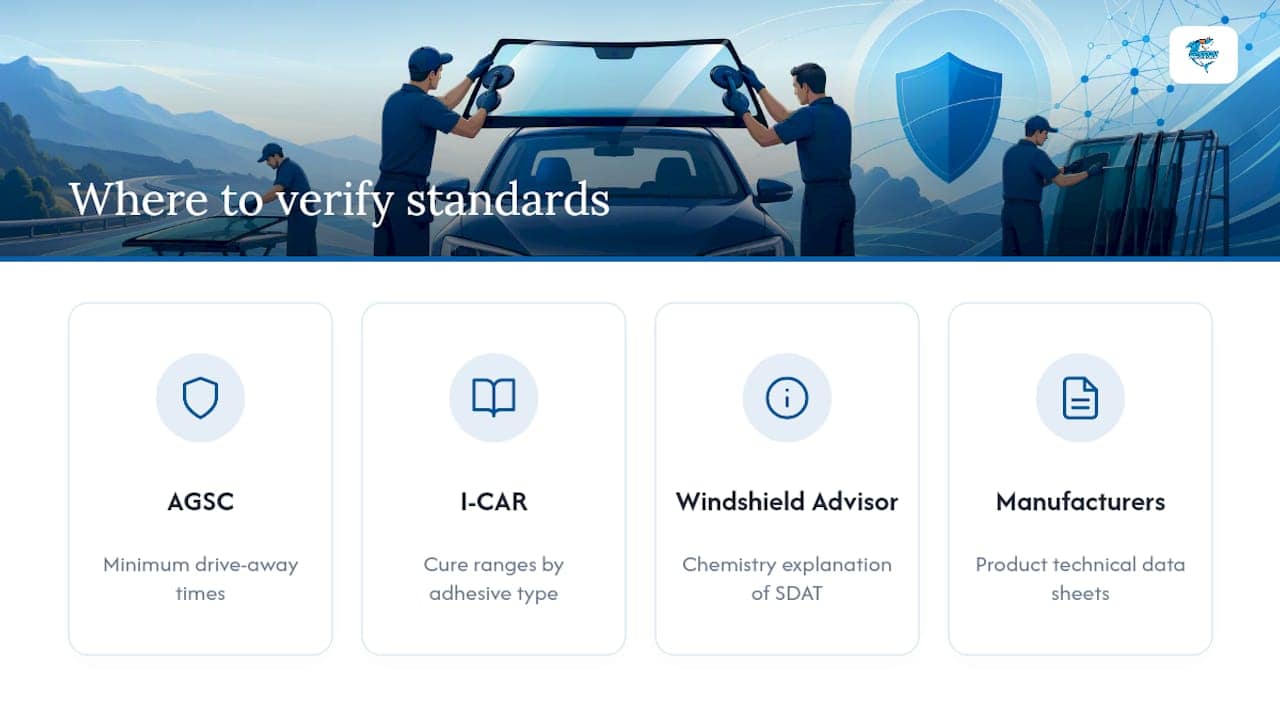
You don’t have to take any shop’s word for it. The AGSC’s minimum drive-away time guidance lays out installer obligations directly, I-CAR’s technical reference covers cure ranges by adhesive type, and Windshield Advisor’s chemistry write-up explains the safety reasoning behind SDAT in plain terms. Adhesive manufacturers like Sika also publish product-specific technical data sheets worth requesting from your installer.
Sources
- Minimum Driveaway Time For Urethane Adhesive
- Minimum Driveaway Time For Urethane Adhesive – AGSC
- Temperature and Safe Drive-Away Time: Windshield Installation Chemistry | Windshield Advisor
- Sika: Fast and safe windshield sealant (PowerCure / SikaTack® ELITE)
FAQ
How Long Do I Wait to Drive After Windshield Replacement?
It depends on the adhesive and weather, but expect anywhere from 30 minutes with a fast-cure product in warm conditions to several hours with a conventional urethane, and up to 24 hours or more in cold weather. Always follow the specific SDAT your technician provides in writing.
What Should You Avoid Doing After Replacing a Windshield?
Skip pressure washing or automatic car washes for at least 48 hours, avoid slamming doors, don’t remove retention tape early, and steer clear of rough roads or highway speeds for the first day.
Is It Recommended to Leave the Windows Cracked After a Windshield Replacement?
Only if your technician specifically tells you to, since cracking a window slightly can relieve cabin pressure from door closures and ease stress on the fresh seal, but this depends on the vehicle and adhesive used.
How Long After Windshield Replacement Can It Get Wet?
Light rain generally isn’t a problem once SDAT has passed, since the adhesive is already handling structural loads at that point, but avoid direct high-pressure water like a car wash for 24 to 48 hours to protect the seal while it finishes curing.
Recommended
- Windshield Repair Time: What Drivers Should Plan For
- 3 Easy Ways to Protect Your Windshield After Replacement
- How Long To Leave Tape On New Windshield?
- How to Calibrate Camera After Windshield Replacement?